
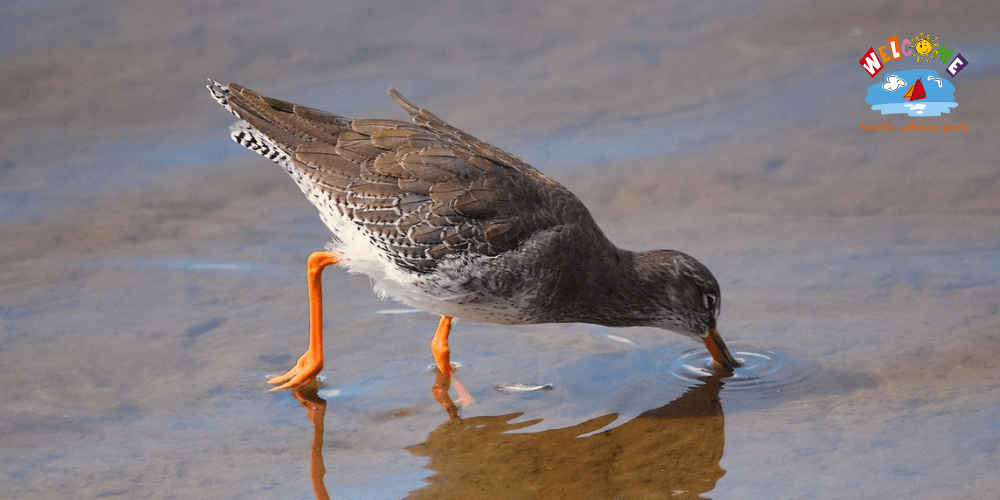
If your dream Devon holiday is a blend of lazy beach days with wildlife and nature spotting, Dawlish Warren could be your perfect destination. This stretch of coast is more than a classic seaside resort. It’s an internationally important National Nature Reserve, a Site of Special Interest, and a Special Area of Conservation, protected for its rare habitats and the thousands of birds that visit each year.
With a little planning, you can enjoy the best of both worlds. Here’s our seasonal guide to wildlife and nature spotting in Dawlish Warren.
Habitats and Wildlife Highlights
Located at the mouth of the Exe Estuary, Dawlish Warren has a mix of habitats that make it brilliant for year-round nature spotting. On a single walk, you can see open beach, rolling sand dunes, estuary mudflats, freshwater pools, reedbeds and herb-rich grassland, each attracting different wildlife.
In winter, huge flocks of wading birds and wildfowl gather on the mudflats, while in spring and summer you’ll notice wildflowers, butterflies and skylarks singing above the dunes.
Dawlish Warren is a birdwatcher’s delight with around 180 species recorded each year, including dunlin, grey plover, brent geese, red-breasted merganser, oystercatcher, teal and wigeon. If you’re lucky you could see a short-eared owl or cirl bunting, while rarities include the broad-billed sandpiper and stone curlew.
The dunes are also home to over 600 flowering plant species, including the tiny sand crocus (also known as the warren crocus), petalwort, and beautiful orchids such as the bee orchid and autumn lady’s tresses. Darting amongst them, you may spot the day-flying Jersey tiger moth, dragonflies like the ruddy darter, and rare, internationally protected sand lizards.
Wildlife Through the Seasons
Autumn & Winter: Prime Birding Time
Autumn and winter are birding magic at Dawlish Warren. Thousands of migratory and overwintering birds use the Exe Estuary to rest and refuel, creating an impressive sight when they gather on the mudflats.
The main high-tide roosts can be viewed from estuary viewpoints, and local birding guides recommend visiting two or three hours either side of high tide for the most activity. Even if you’re new to birding, watching flocks of waders wheel overhead is a truly magical sight – and an unforgettable family memory.
Spring & Summer: Dunes, Flowers and Nesting Birds
Spring and summer bring a different kind of magic. More migrants pass through, while others pair up and start to nest. Beach-nesting birds like ringed plover need quiet patches of sand and shingle, while terns can be seen feeding offshore, making early mornings and evenings a lovely time for a stroll, binoculars in hand.
In the dunes and grasslands, wildflowers will be in full bloom with butterflies, dragonflies and other insects busy among the flowers. Because many of the plants and wildlife seen here are rare or vulnerable, it’s important to follow local signage and stick to boardwalks or waymarked trails, especially during breading season.
Nature-Spotting Trails and Coastal Walks
One of the best ways to explore the reserve is to follow this 3.2-mile loop from the railway station. Stop at the visitor centre to look at the displays and pick up information on what to see, then follow the clearly marked route into the dunes and along the edge of the estuary, pausing to observe birds from viewpoints and the bird hide. This is a relaxed, low-level walk for families, with plenty of opportunities to stop for ice cream, play on the sand and take photos of the estuary.
If you fancy going further afield, Dawlish Warren links into longer routes such as the Exe Estuary Trail and the South West Coast Path. The largely flat Exe Estuary Trail runs between Dawlish Warren, Exmouth and Exeter, offering wide estuary views and regular wildlife-spotting opportunities from a well-maintained, accessible path.
The South West Coast Path stretches for 630 miles around the coast, with several routes around the Dawlish Warren area including Dawlish and Dawlish Warren where you might spot the famous black swans, and Dawlish Countryside Park.
Whichever route you choose, check the tide times, wear comfortable footwear and pack snacks, water and a light extra layer – sea breezes can feel cooler than you might imagine.
Visiting Responsibly and Useful Information
Because Dawlish Warren is so important for nature and wildlife, it’s has its own Dawlish Warren Code to help visitors tread lightly. Key points include staying on marked paths and boardwalks, keeping dogs on leads and away from mudflats, and avoiding clearly signed refuge and roosting areas, especially in spring and autumn when birds are migrating and need to conserve energy. By following this advice, you’ll be helping to protect rare species and internationally significant habitats for future generations.
To find out more, there are several excellent sources of local information to explore before or during your stay, including:
- Teignbridge District Council’s page on Dawlish Warren NNR
- Exe Estuary Management Partnership has excellent information on visiting the estuary, activities, wildlife, etc.
- Devon Wildlife Trust’s reserve at Dawlish Inner Warren
- South East Devon Wildlife’s pages on Dawlish Warren
- RSPB’s Exeter’s local group pages on Dawlish Warren
- Dawlish Warren latest sightings blog run by local birders
Explore Dawlish Warren with Welcome Family
Round off your wildlife and nature-spotting adventures with a cosy stay nearby. Welcome Family offers a range of accommodation with Dawlish Warren’s wonderful nature right on your doorstep. Request a brochure or book your stay today.