
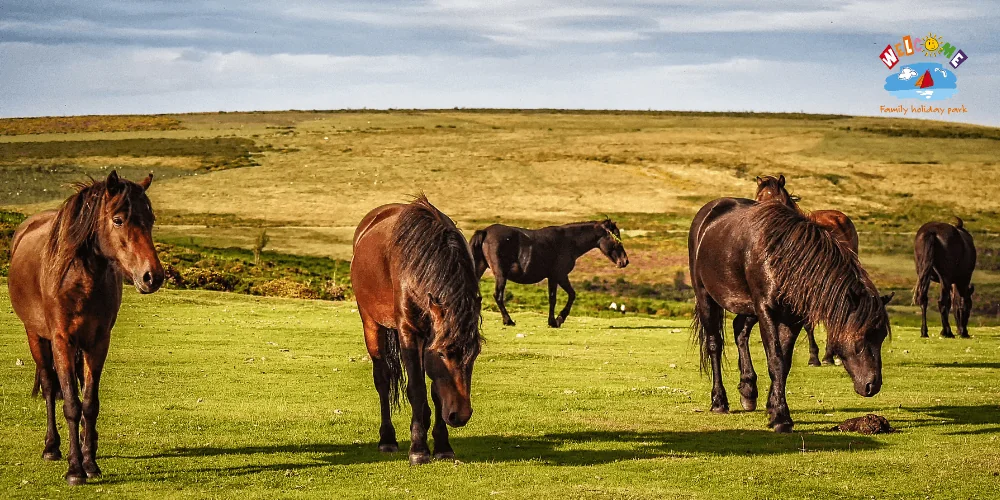
You can still see wild Dartmoor ponies roaming freely across the moors in 2026, and spotting them is one of the most memorable family experiences in South Devon.
For many visitors to Dartmoor, the ponies are the highlight of the trip. Children love seeing them up close, photographers wait patiently for the perfect misty moorland shot, and walkers often find a quiet moment with a grazing pony becomes the memory they talk about long after their holiday ends.
But these iconic animals are far more than a photo opportunity. Dartmoor ponies are deeply connected to Devon’s history, wildlife, farming traditions and landscape management. Their story is also more fragile than many people realise.
If you’re staying at Welcome Family Holiday Park and planning a family day trip to Dartmoor, here’s everything you need to know before you go.
Why Dartmoor Ponies Are So Special
The Dartmoor pony is one of Britain’s oldest native pony breeds and has lived on the moors for thousands of years. Archaeological evidence suggests ponies grazed the area as far back as the Bronze Age, making them part of the landscape long before roads, villages or even many of the famous tors existed.
These ponies evolved to survive harsh winters, strong winds and poor grazing conditions. Over generations, they developed incredible stamina, tough hooves and the ability to thrive on rough vegetation like gorse, heather and moorland grasses.
Today, they remain one of the defining symbols of Dartmoor National Park.
Interestingly, Dartmoor ponies do far more than simply live on the moor — they actively help protect it.
How Dartmoor Ponies Help Wildlife
Many visitors don’t realise that the ponies play an important role in conservation.
As they graze, they naturally control dominant vegetation such as gorse and bracken. This helps maintain open habitats that support wildlife including rare butterflies, ground-nesting birds and moorland plants.
Without grazing animals, large areas of Dartmoor would quickly become overgrown, changing the balance of the ecosystem.
Conservation groups across Devon now recognise controlled grazing as an important part of protecting the moor for future generations.
Are Dartmoor Ponies Endangered?
Some types are.
The pure pedigree Dartmoor pony is considered rare, with breeding numbers remaining low compared to historic levels. In the early 20th century, there were tens of thousands of ponies on the moors. Today, numbers are far smaller, and breeders work hard to protect traditional bloodlines.
Modern challenges include:
- Rising land management costs
- Harsh winters
- Declining grazing income
- Traffic accidents on moorland roads
- Reduced demand for working ponies
This makes respectful tourism and public awareness more important than ever.
The Different Types of Dartmoor Ponies
Visitors are often surprised to learn that not all ponies on Dartmoor are the same breed.
In 1950, there were about 30,000 ponies on the moors. Numbers have since dropped to approx. 1,500, composed of four main types:
- Pedigree Dartmoor Ponies. These are the traditional native breed ponies. They are small, strong and elegant, usually standing no taller than 12.2 hands high.
- Heritage Ponies. These ponies live naturally on the open moor and share many traditional Dartmoor characteristics, although their breeding may be less formally recorded.
- Hill Ponies. Many free-roaming ponies are mixed-breed hill ponies. These hardy animals are perfectly adapted to life on the moor and are often descendants of historic working ponies.
- Shetland Crosses. You may also spot piebald or skewbald ponies with Shetland ancestry. These were historically bred for mining and agricultural work.
Best Places to See Dartmoor Ponies in 2026
One of the joys of visiting Dartmoor is that pony sightings often happen unexpectedly. However, some areas are particularly reliable.
Haytor
Haytor is one of the most accessible places for families visiting Dartmoor. The wide-open spaces, dramatic granite tors and nearby parking make it ideal for younger children.
Ponies are frequently seen grazing near the roads and walking trails here.
Widecombe-in-the-Moor
Widecombe in the Moor is a beautiful traditional Dartmoor village where ponies are often spotted nearby. It also makes a fantastic stop for cream teas and independent shops.
Postbridge
Postbridge is known for its famous clapper bridge and peaceful moorland scenery. Early mornings and quieter evenings can be especially good for pony sightings.
Bellever Forest
Families looking for easier walks often enjoy the trails around Bellever Forest, where ponies are commonly seen near woodland edges.
For guests staying at Welcome Family, combining pony spotting with a scenic picnic or short walk makes an easy and affordable family day out.
Important Rules for Visiting Dartmoor Ponies
Although they may seem calm and friendly, Dartmoor ponies are not pets.
Most belong to local commoners and farmers, even though they roam freely across the moor.
To help keep both visitors and ponies safe:
- Never feed the ponies
- Do not touch or approach them
- Keep dogs under close control
- Drive slowly on moorland roads
- Give ponies plenty of space for photographs
Feeding wild ponies can cause serious health problems and encourages dangerous behaviour around roads and people.
Family-Friendly Places To Meet Ponies Safely
If your children would love a closer experience with ponies, these attractions offer safer and more hands-on encounters.
- Dartmoor Pony Heritage Trust: Enjoy guided walks, take part in conservation work, and learn more about the beautiful Dartmoor pony.
- Pennywell Farm: Enjoy a day of hands-on family action down at the farm. As well as ponies, you can hang out with goats, guinea pigs, rabbits, lambs and the famous miniature pigs.
- Becky Falls: As well as being voted Devon’s Top Beauty Spot, Becky Falls was also chosen as one of the World Wildlife Fund’s Amazing Family Days Out. One of the many great family activities here include feeding the miniature Shetland ponies.
- Crealy Theme Park: With over 60 rides and attractions including an animal zone, this is the perfect option if you want to combine your animal adventures with some thrilling rides.
Stay Near Dartmoor at Welcome Family Holiday Park
One of the best things about staying at Welcome Family is having easy access to both the coast and the countryside.
You can spend the morning on the beach at Dawlish Warren and be exploring the wild beauty of Dartmoor later the same day.
For families visiting South Devon in 2026, pony spotting remains one of those simple experiences children genuinely remember — especially when it’s combined with moorland walks, picnic stops, waterfalls and dramatic views.
Welcome Family’s first-class accommodation in South Devon is the ideal base for your Dartmoor pony adventures. Simply book online on call us on 03451 656265.